Your brain's background rhythm
Your brain cells communicate using tiny electrical signals. When millions of them fire together, they create rhythmic patterns that sensors on the scalp can pick up, a test called an electroencephalogram (EEG). Scientists group these rhythms into bands by how fast they cycle, measured in hertz (cycles per second).
- Delta (roughly 0.5–4 Hz): most prominent in deep sleep
- Theta (roughly 4–8 Hz): seen in drowsiness and light sleep
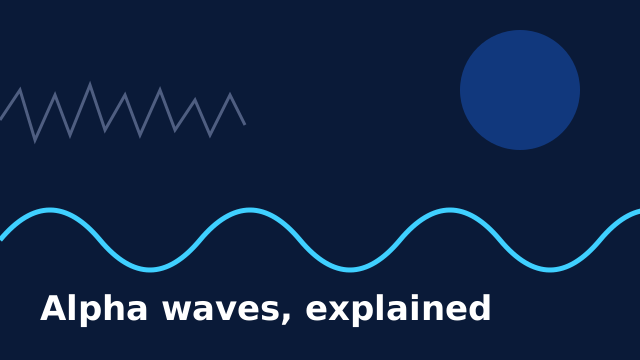
- Alpha (roughly 8–12 Hz): typical of relaxed wakefulness, especially with eyes closed
- Beta (roughly 13–30 Hz): linked with active thinking and alert concentration
- Gamma (above about 30 Hz): associated with complex information processing
Your brain is never in just one band. These rhythms overlap all the time, and their balance shifts with what you're doing.
When alpha shows up
Alpha rhythm was one of the first patterns described in early EEG research. It's easiest to see when a person sits quietly with their eyes closed, and it tends to fade when they open their eyes or start solving a problem. That's why alpha is often called the brain's “idling” rhythm: calm but awake.
Many people recognise the feeling. It's a bit like the drifting calm of a long shower, a quiet walk or the moment just before you get up to start your day.
Alpha, relaxation and attention
Researchers have studied alpha activity in relation to relaxation, meditation, creativity and how the brain filters out distractions. It's an active field, and the picture is still developing. Higher alpha isn't simply “better”. What seems to matter is the brain's ability to shift between states as you need them.
Where audio programs come in
Some audio products use rhythmic sound patterns, such as binaural beats or pulsed tones, intended to encourage particular brainwave states. This idea is often called brainwave entrainment. Studies on it are mixed, and results differ between people and designs.
Neural Revive is one such program. Its creators say the audio is designed to guide listeners toward an alpha-style relaxed state over a ten-minute session. Even setting the science aside, a daily ten-minute break with your eyes closed is a sensible habit. You can learn more on our How It Works page.
The takeaway
Alpha waves are a normal part of a relaxed, awake brain. If you enjoy audio-based relaxation, it can be a pleasant way to give your mind a regular rest. Combine it with good sleep, movement and social connection, and talk to your doctor about any ongoing concerns with memory or thinking.